Best Native Plants for Front Yards in Coastal Orange County
If you're thinking about replacing your lawn or creating a more sustainable landscape, you've probably heard that California native plants are the way to go.
As a landscape designer in Orange County, I work with native plants regularly, and for good reason. They're beautiful, resilient, support local wildlife, and can dramatically reduce water use once established.
The challenge is that many homeowners picture a native landscape as something wild, dry, or difficult to maintain. In reality, a thoughtfully designed native garden can feel polished, colorful, and completely at home in neighborhoods throughout Newport Beach, Laguna Beach, Mission Viejo, Rancho Santa Margarita, Laguna Niguel, San Juan Capistrano, and across coastal Orange County.
The secret isn't simply planting natives. It's choosing the right native plants and combining them in a way that feels intentional and garden-worthy.
Why Choose Native Plants for Your Front Yard?
California native plants evolved in our Mediterranean climate, which means they're naturally adapted to our dry summers and mild winters.
Compared to traditional landscapes, native gardens often offer:
Reduced water consumption
Lower long-term maintenance
Improved pollinator habitat
Better drought resilience
Greater biodiversity
Fewer fertilizer requirements
For homeowners interested in lawn replacement rebates or water-wise landscaping, native plants are often one of the smartest investments you can make.
My Favorite Native Plants for Orange County Front Yards
Cleveland Sage (Salvia clevelandii)
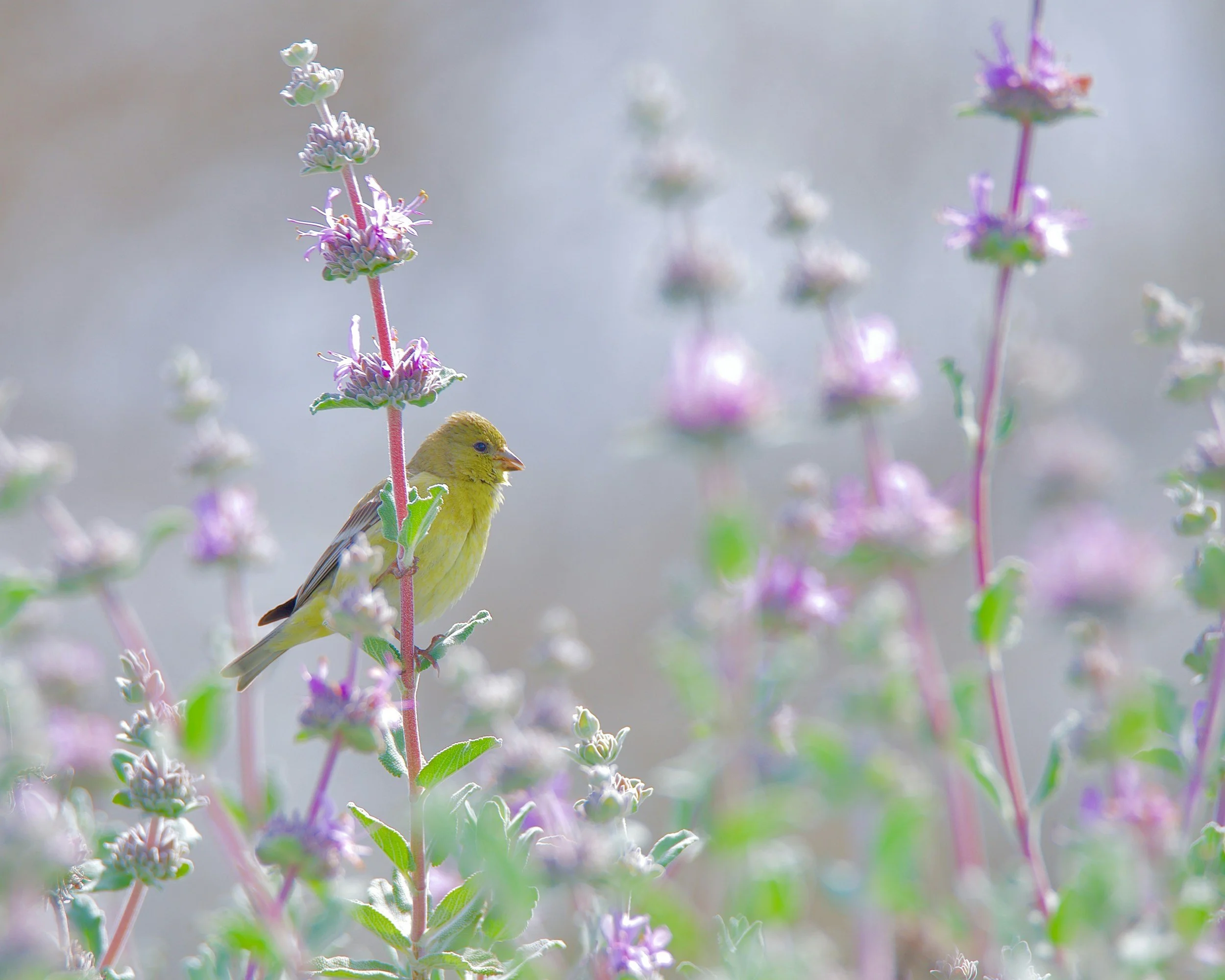
If I could only choose one California native shrub, Cleveland Sage would be near the top of the list.
Its silver-green foliage provides year-round structure, while fragrant purple flowers attract bees, butterflies, and hummingbirds throughout the growing season.
What I love most is that it looks intentional in residential landscapes while still providing ecological value.
Mature size: 4–5 feet tall and wide for the original, 3-4 for the hybrid ‘Allen Chickering’
Best for:
Sunny front yards
Mediterranean-style gardens
Pollinator gardens
Monkey Flower (Diplacus aurantiacus)
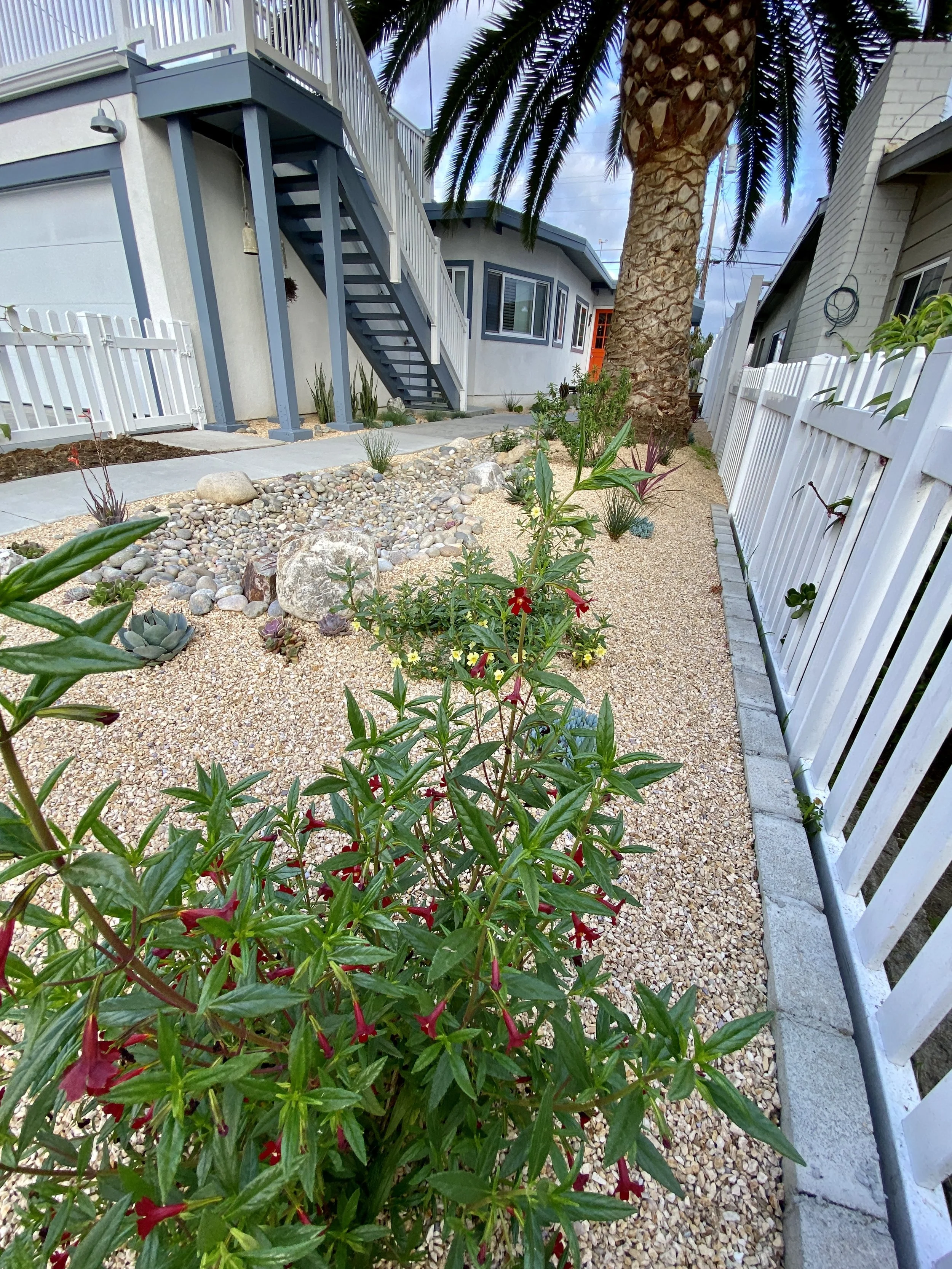
Monkey Flower is one of the hardest-working native plants available.
The bright orange blooms seem to attract every hummingbird in the neighborhood, and it tolerates a surprising range of conditions.
I frequently use it in native landscape designs because it bridges the gap between ecological planting and ornamental gardening.
Mature size: 3–4 feet tall and wide
Best for:
Slopes
Dry borders
Pollinator gardens
California Buckwheat (Eriogonum fasciculatum)
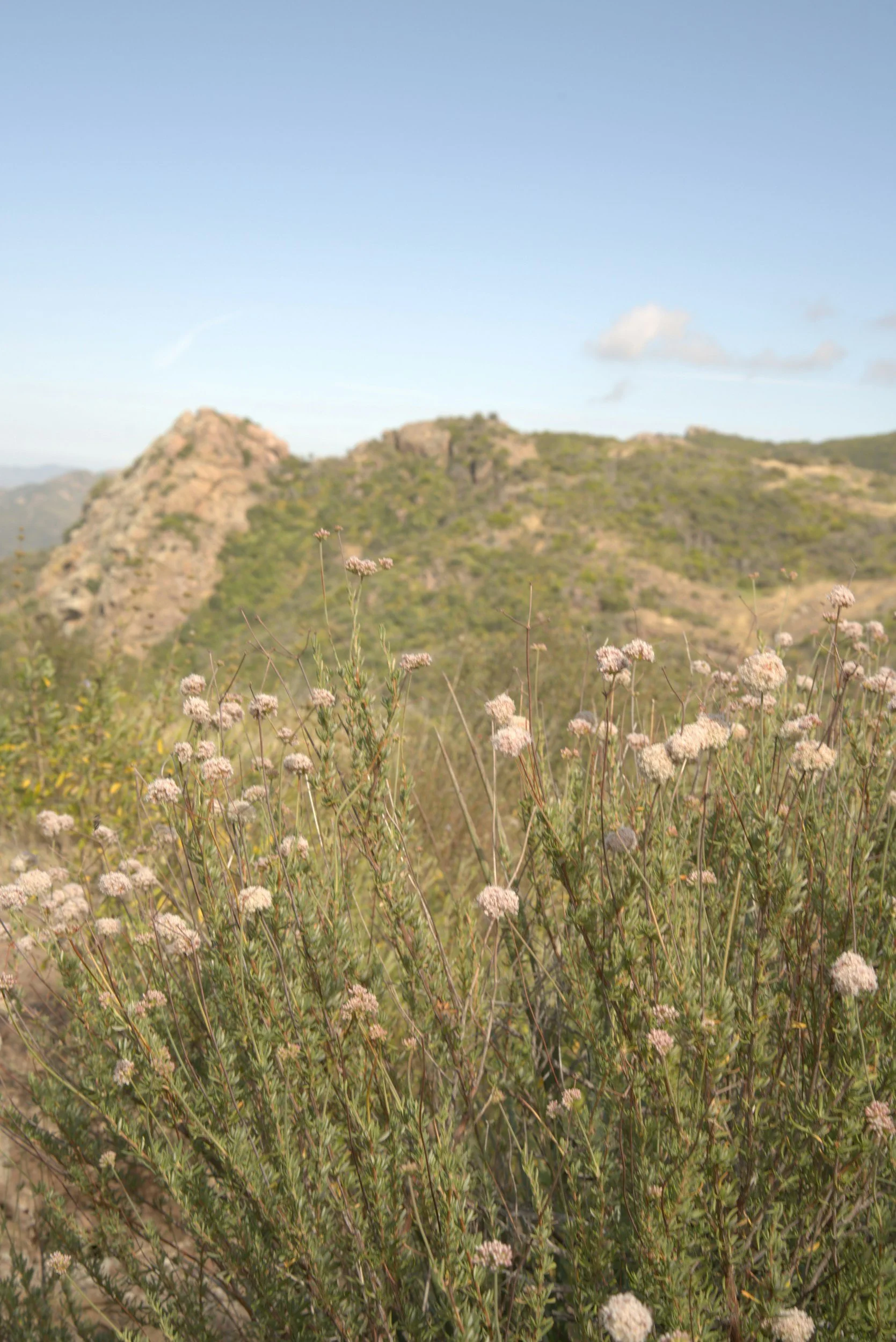
California Buckwheat may not be flashy at first glance, but it is one of the most valuable native plants for supporting local ecosystems.
Its soft flower clusters provide months of interest and become beautiful rust-colored seed heads in fall.
It's also one of the most important habitat plants for native insects and pollinators.
Mature size: 3–4 feet
Best for:
Naturalistic gardens
Dry slopes
Habitat-focused landscapes
Canyon Prince Wild Rye
Every landscape needs texture.
Canyon Prince Wild Rye brings movement and softness to native gardens while remaining durable and easy to maintain.
The blue-green foliage pairs beautifully with sages and flowering perennials.
Mature size: 2–3 feet
Best for:
Mass plantings
Modern native landscapes
Naturalistic designs
The Biggest Mistake Homeowners Make with Native Plants
The most common mistake I see is treating native plants like a collection rather than a design.
A successful landscape isn't just a list of good plants.
It's about:
Repetition
Plant spacing
Seasonal interest
Mature plant size
Visual structure
Without these elements, even beautiful native plants can feel chaotic.
Can Native Gardens Look HOA-Friendly?
Absolutely.
Many of the native landscapes I design are located in HOA communities throughout Orange County.
The key is using strong design principles:
Defined pathways
Correct sizing
Repeated plant groupings
Evergreen structure
Clear focal points
When done correctly, native gardens often look more refined than traditional landscapes while using a fraction of the water.
Native Doesn't Mean Boring
One of the biggest misconceptions about California native landscapes is that they lack color.
In reality, native gardens can provide:
Purple sage blooms
Orange monkey flower
White buckwheat flowers
Silver foliage
Seasonal grasses
Year-round texture
Combined thoughtfully, these plants create landscapes that feel vibrant and dynamic without excessive water use.
Creating a Front Yard That Belongs in California
For decades, Southern California landscapes borrowed heavily from climates that didn't match our environment. I see the “Miami Vice” look from the 80’s everywhere!
Today, more homeowners are embracing landscapes that work with our climate rather than against it.
Whether you're interested in reducing water use, creating pollinator habitat, or simply designing a front yard that feels more connected to California, native plants offer an incredible palette to work with.
The goal isn't just to save water.
It's to create a landscape that becomes more beautiful every year while supporting the environment around it.
If you're considering a front yard renovation or lawn replacement project in Orange County, a professional landscape design can help you select the right plants, create a cohesive plan, and ensure long-term success.